

Some words and experiences come with a lot of baggage, conjuring up fear, stigma, and shame.
But being afraid or ashamed doesn’t protect us from those experiences or those words. It just keeps us from really understanding them or being able to talk about them. And what we can’t process for ourselves, we can’t help those we love and lead with either.
In the clinical space, dissociation is one of those words and experiences that is met with a lot of discomfort. How people were taught and trained to address dissociation often perpetuates shame and stigma, and its pop culture depictions and usage haven’t helped either.
But my guest today has spent her career making the case that dissociation isn’t rare, or even necessarily pathological; it’s actually a common and deeply human experience that ranges from everyday zoning out to more complex presentations that do need support.
And as you’ll hear, Dr. Jamie Marich believes understanding this spectrum isn’t just a matter of clinical education, but is vital for our own self-knowledge and how we lead others.
Dr. Jamie Marich, PhD, LPCC-S, REAT (she/they) began her career as a humanitarian aid worker in Bosnia-Herzegovina from 2000-2003, primarily teaching English and music. Jamie travels internationally teaching on topics related to trauma, EMDR therapy, expressive arts, mindfulness, and yoga, while maintaining a private practice and online education operations in her home base of Akron, OH. Marich is the founder of the Institute for Creative Mindfulness and the developer of the Dancing Mindfulness approach to expressive arts therapy, and the author of several books on EMDR, dissociation, mindfulness, recovery, and more.
Listen to the full episode to hear:
- The stakes of identifying as having a dissociative disorder, and why Jamie felt it was vital for them speak up anyway
- How no longer being “zipped in” has given Jamie access to true authenticity and flow in her personal and professional lives
- Defining dissociation at its most basic, and how and why it shows up in everyday situations
- Why having parts is not necessarily pathological and why for some people those entities become so distinct
- The most persistent and harmful myths about dissociative disorders, for both patients and providers
- Why Jamie starts trainings with having people learn to recognize their own dissociative tendencies
- Why DID is not a TikTok fad, and why more recognition and discussion is better than ignorance
Learn more about Dr. Jamie Marich:
- Website
- Redefine Therapy
- The Institute for Creative Mindfulness
- Instagram: @drjamiem, @traumatherapistrants
- TikTok: @traumatherapistrants
- YouTube: @DrJamieMM
- Dissociation Made Simple: A Stigma-Free Guide to Embracing Your Dissociative Mind and Navigating Daily Life
Learn more about Rebecca:
- rebeccaching.com
- Work With Rebecca
- The Unburdened Leader on Substack
- Sign up for the weekly Unburdened Leader Email
Resources:
- Coming Out As Plural – Psychotherapy Networker
- Fighting Dissociation Phobia and Coming Out as a Professional with a Dissociative Disorder
- Am I In A Therapy Cult?
- Decolonizing Therapy: Oppression, Historical Trauma, and Politicizing Your Practice, Jennifer Mullan, PsyD
- Jasmine Adams, LCSW, PMH-C – The Institute for Creative Mindfulness
- Plural Pride Meets LGBTQ+ Pride: Webinar Replay
- Plural Pride Meets LGBTQ+ Pride: Katie Keech and Dr. Jamie Marich
- Healing Dissociative Identity Disorder – Psychotherapy Networker
- Truth Demands: A Memoir of Murder, Oil Wars, and the Rise of Climate Justice, Abby Reyes
- “Your Heart Knows the Way Home,” Te Martin
- The Testaments
- The Late Show with Stephen Colbert
- John R. Mabry
Favorite Moments
“I want people to listen to us—those of us with both lived and learned experience.”
“At a certain point, I stopped caring if people thought I was crazy.”
“Authenticity is really a higher power.”
“For years, I lived zipped in.”
“Dissociation is not a dirty word.”
“We sever from the present moment because it’s painful, intolerable… or sometimes simply boring.”
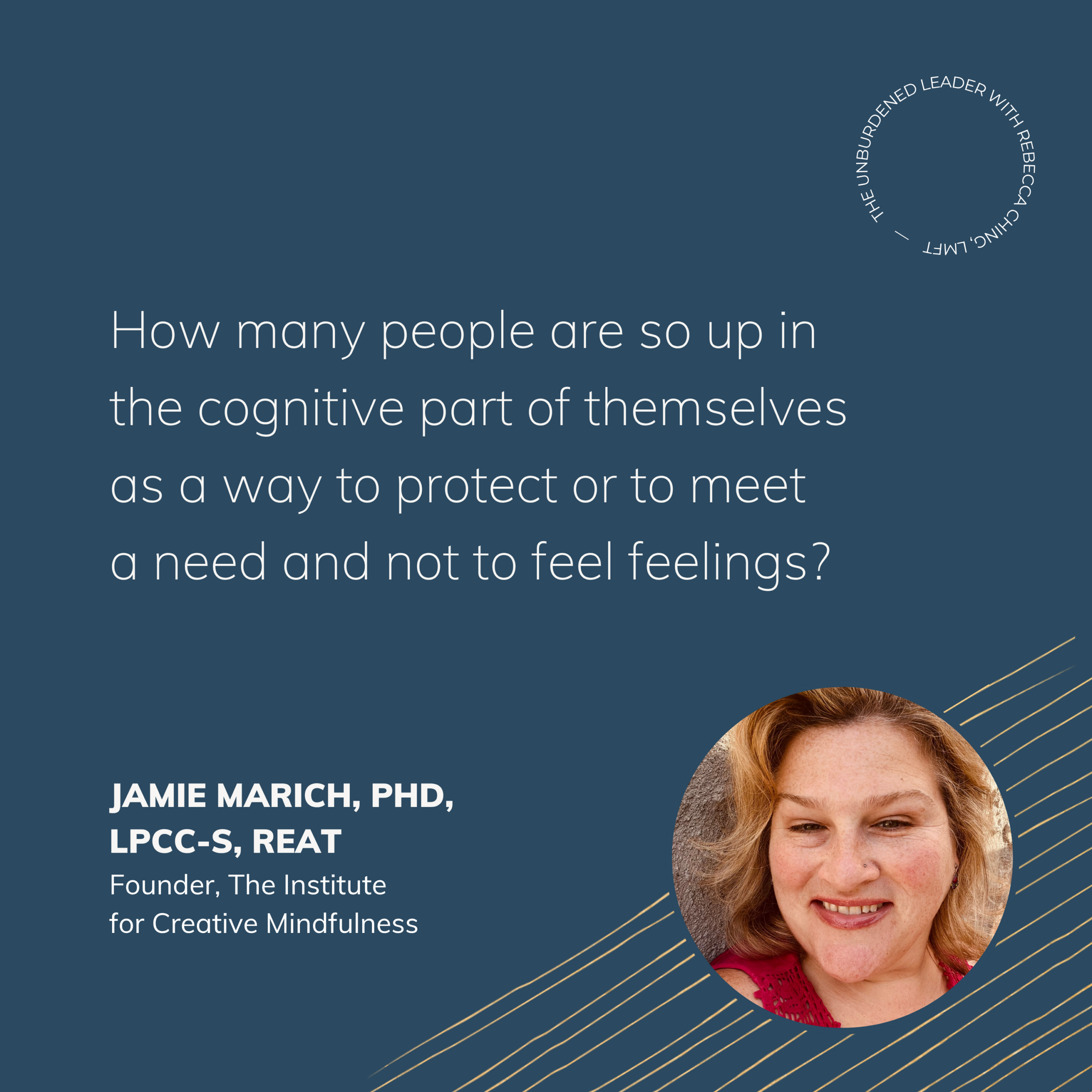
“Protection is important—but sometimes it’s more helpful to ask, ‘What need is this meeting?’”
“I’m not here to tell you exactly what to do.”
“No one model is going to give you everything you need.”
“We want certainty. But nothing gives you certainty when you’re working with people.”
“Don’t let them dissociate? You’re not that powerful.”
“Healing requires humility.”
“DID is not a TikTok fad. Maybe we’re just getting better at recognizing it.”
“Shame is not a diagnostic criterion.”
“Dissociation doesn’t necessarily need to be healed. It needs to be navigated.”
“It’s both a disability and a superpower.”
“Check the myths. Check the biases.”
“You have dissociated. You just may not realize it yet.”
Conversation Highlights
02:00 — Why Jamie Chose to “Come Out” as Plural
Why speaking publicly about living with a dissociative disorder felt riskier than sharing other parts of their story—and why remaining silent eventually became the greater burden.
10:30 — From “Zipped Up” to Authentic
Jamie shares how masking shaped the early years of their career and what changed when they stopped hiding parts of themselves.
18:00 — Authenticity vs. Oversharing
Rebecca and Jamie explore what authentic leadership really looks like, and why being yourself doesn’t mean abandoning kindness or discernment.
24:00 — What Dissociation Actually Is
A practical definition of dissociation, why it’s a universal human experience, and how it exists on a broad spectrum.
28:00 — Protection or Meeting a Need?
Why reframing dissociation as meeting needs—not simply protecting us—opens the door to more compassion and less shame.
31:00 — The Biggest Myths About DID
Jamie unpacks common misconceptions, why fear still dominates many clinical spaces, and why dissociative disorders remain deeply misunderstood.
35:00 — Why Therapists Need to Know Their Own Dissociation
Instead of memorizing techniques, Jamie argues that clinicians must first understand their own internal experiences before effectively helping others.
38:00 — Therapy Models, Certainty, and “Therapy Cults”
A conversation about rigid allegiance to treatment models, the longing for certainty, and why curiosity is a more trustworthy guide.
40:30 — Is DID Really a TikTok Fad?
Jamie explains why increased visibility shouldn’t automatically be mistaken for overdiagnosis—and why curiosity serves us better than skepticism.
46:30 — The Gifts of Dissociation
How creativity, adaptation, imagination, and resilience can emerge alongside the challenges of dissociation.
49:00 — Teaching Dissociation with Humility
Why lived experience belongs alongside academic expertise and what healing humility looks like in practice.
55:00 — What Everyone Should Understand About Dissociation
Jamie leaves listeners with an invitation to examine their own assumptions, recognize their own moments of dissociation, and approach themselves—and others—with greater compassion.
Closing Reflection
Dissociation has long been treated as something to fear, fix, or hide.
But this conversation offers a different invitation.
What if dissociation isn’t simply a disorder to eliminate—but a deeply human way our minds adapt to survive, create, protect, and meet needs?
When we replace certainty with curiosity…
When we replace shame with understanding…
When we listen to people with lived experience instead of speaking over them…
We create room for healing.
Not only for those living with dissociative disorders, but for all of us.
Because every one of us has moments where we disconnect.
And learning how to notice those moments with compassion may be one of the most important leadership practices we can cultivate.
Reflection Prompt
Where in your life have you been “zipped up” to feel safe?
What might change if you approached that part of yourself with curiosity instead of judgment?







Comments +